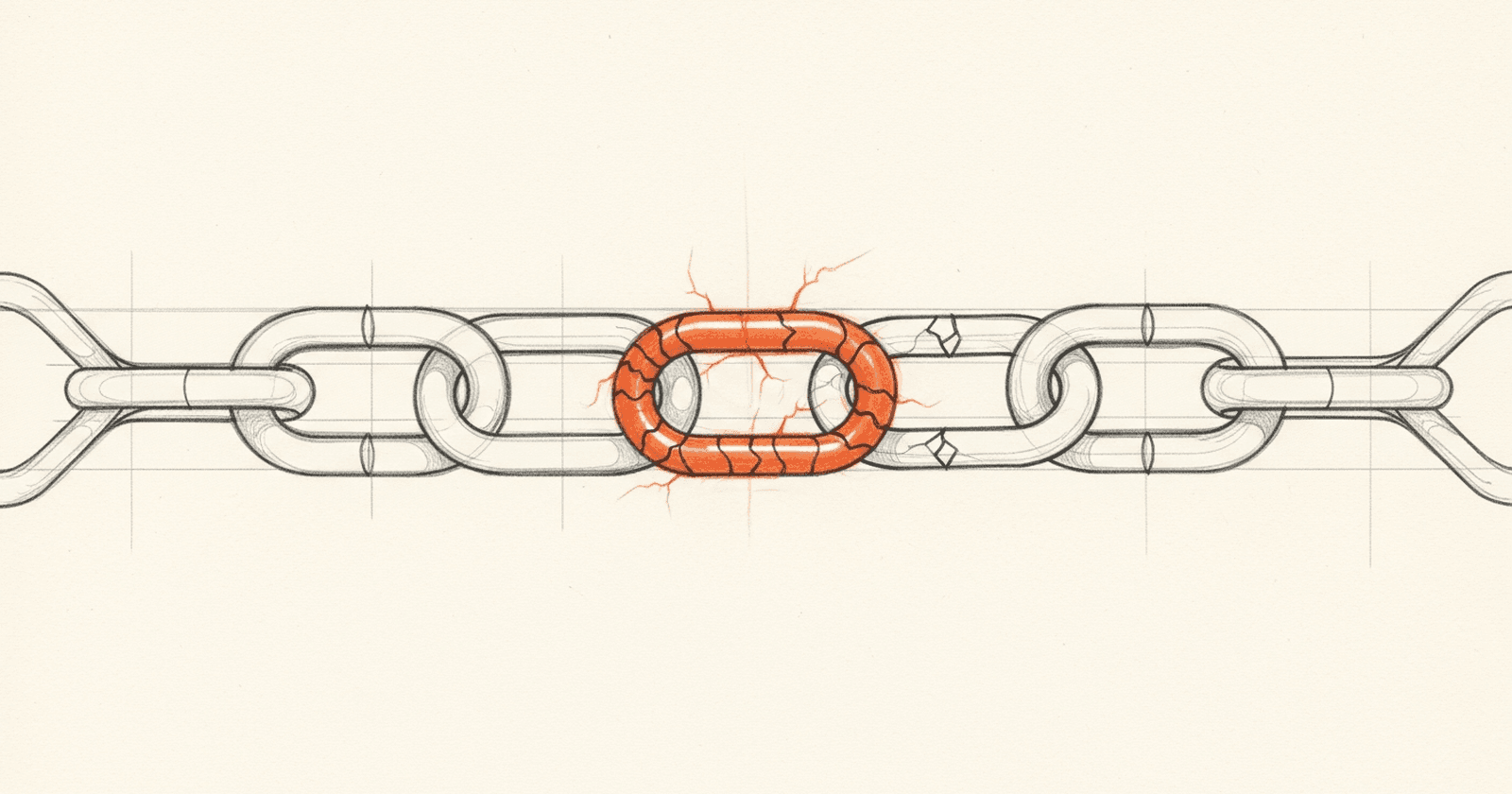
Three Pipelines, Three Different Bottlenecks
Field Notes
Three founding-client pipelines, three deals all scored "qualified" by a real methodology, three completely different reasons they stalled. In every case the methodology was directionally right and mechanistically wrong about where the deal would die. The weakest readiness dimension decides, and the scorecard never names it.

By Wilton Blake, B2B Decision Strategist
17 years in B2B. Now diagnosing why qualified pipeline loses to no decision.
Key Takeaways
A sales methodology confirms a deal is worth working; it does not name where the deal is weak. 40-60% of qualified B2B deals end in no decision (Dixon & McKenna, HBR 2022).
Company A (Problem Conviction): the buyer agreed there was a problem but would not price the inaction. More ROI decks do not move a conviction gap; making inaction-regret salient lowers deferral (Mourali et al., 2018).
Company B (Outcome Confidence): the buyer loved the product but could not picture the install. More demos do not help; buyers trust self-generated evidence over vendor claims (Smith & Swinyard, 1983).
Company C (Organizational Readiness): the champion kept winning while the buying group doubled. Win rates peak at 4-5 stakeholders and decline past six (Brontén & Cabrera, 2025).
The weakest-link principle: a deal moves at the speed of its weakest dimension. Three strong dimensions plus one broken one is still a dead deal.
Three folders sat on my desk this week. Each one a finished diagnostic for a different founding client. Each one with a single dimension circled in the same orange marker.
From across the room they looked identical. Three companies, three scorecards, three orange circles. You could have shuffled them and I would not have noticed from six feet away.
They are not identical. The circle is in a different place on every one. And the thing those three deals share is not the dimension that broke. It's the line written above the circle, the same line on all three pages, the line nobody on those sales teams had written for themselves.
I have now run the DecisionScope diagnostic on three pipelines inside the same campaign window. Same instrument, three different companies, three different methodologies in the building. I expected variety. I did not expect the variety to land exactly where it did. Let me show you the three folders.
What "qualified" actually tells you
Every one of these deals was qualified. Not by me. By a real methodology, run by a real team that knows how to use it.
Company A ran MEDDIC. Company B ran BANT. Company C ran Challenger. In all three, the methodology said the deal was healthy. Metric identified. Economic buyer named. Pain confirmed. The reps had done the work, and the work checked out.
Then the deals stalled or wobbled, and the methodology had nothing left to say. Because here is what a methodology score actually tells you. It tells you the deal is alive. It does not tell you where it's weak.
Those are different facts. A deal can be qualified and dying at the same time, and most of the deals that die this way die quietly, months after the call that felt great. Somewhere between 40 and 60 percent of qualified B2B deals end in no decision at all, and the research that established that number found most of those losses were not the buyer choosing a competitor or choosing the status quo. They were the buyer unable to decide.
Right about the metric. Right about the buyer. Right about the pain. Wrong about the one thing that actually decides. That was true in all three folders, and it's the reason I stopped treating "qualified" as a finish line a long time ago. Qualification is the diagnostic layer the methodology was never built to be. So let's open the folders.
Company A: the deal that agreed with everything
A SaaS company, a few million in ARR, MEDDIC shop, good reps. The deal that landed on my desk had been in the pipeline for four months and the buyer agreed with everything.
Agreed there was a problem. Agreed the metric mattered. Agreed, on three separate calls, that the current state was costing them. The MEDDIC card was clean. The rep was confident, because every box you're trained to check, the buyer had checked for him.
And the buyer would not put a number on the cost of doing nothing. Not wouldn't share it. Couldn't produce it. When the rep pushed on the cost of inaction, the buyer got vaguer, not sharper.
The rep read that as a value problem and ran the play he was trained to run. More ROI decks. A tighter business case. A second model with cleaner assumptions. None of it moved the deal, because the deal didn't have a value problem.
That was never a pricing problem. The scorecard came back with Problem Conviction as the binding constraint, and Problem Conviction is not "do they agree there's a problem." It's "do they believe the problem is theirs, now, badly enough to act." The buyer agreed in the abstract and avoided in the concrete, which is exactly what people do with information that would force a hard decision. There's a deep literature on this: people actively avoid free, useful information when receiving it would threaten a belief or force an uncomfortable choice. The agreement was real. It was also the buyer's way of staying still.
What would have moved it isn't another ROI deck. It's making the regret of doing nothing more vivid than the regret of choosing wrong. When researchers made inaction-regret salient, choice deferral dropped. The fix for this deal lived in the cost of inaction, and the rep had been running the one play that talked about cost without ever making inaction feel expensive. He was answering a question the buyer wasn't asking. The buyer didn't have a solution problem. He had an urgency problem, and MEDDIC had no field for it.
Company B: the deal that loved the product
Different folder. Services-led company, BANT shop, a deal that everyone felt good about because the buyer loved the product.
Genuinely loved it. Sat through the full demo, asked sharp questions, told the rep it was exactly what the team needed. Budget confirmed. Authority confirmed. Need confirmed. Timeline, soft, but present. On paper this was the healthiest of the three.
The buyer could not picture the install. Ask him what the product did, he could tell you. Ask him what Tuesday looked like in his own environment three weeks after go-live, and he went quiet. He liked the product the way you like a house in a listing. He could not see himself living in it.
The rep read the enthusiasm as readiness and ran more demos. A second walkthrough. A custom-tailored third one. Each demo got the same warm response and moved the deal exactly nowhere, because the demo was never the problem. You can't demo your way out of a buyer who can't see himself on the other side of the purchase.
The scorecard circled Outcome Confidence. The buyer believed in the product in general and couldn't generate belief about the product in his specific world, and those are not the same belief. The research here is old and clean: buyers believe what they generate themselves far more than what you claim. Direct experience produces conviction that predicts purchase. A vendor's demo, however good, produces a weaker belief held with less conviction. More demos gave the buyer more of the weak kind.
What this deal needed was a way for the buyer to generate his own evidence inside his own environment. A pilot scoped to his data. A reference customer who looked exactly like him. A first-thirty-days plan written for his stack, not the generic one. The whole problem was that the buyer couldn't picture six months out, and BANT had no field for that either, because BANT measures whether a buyer is qualified to buy, not whether he can see himself having bought.
Company C: the deal the champion was winning
Third folder. Challenger shop, the most sophisticated of the three teams, and the deal with the best champion I'd seen in months.
She was doing everything right. Mobilizing internally, teaching the rep where the bodies were buried, pushing the deal forward on the calls the rep wasn't on. The Challenger playbook was running clean. The rep trusted her, correctly.
The buying group quietly doubled in a quarter. When the deal started, the champion was selling to a room of three. By the time it stalled, the room was seven, and four of those seven had never heard the story from anyone but her, secondhand, in a meeting the rep wasn't in.
Nobody noticed the room change, because the champion was still winning every conversation she was in. The rep kept arming the champion and the champion kept fighting brilliantly, in a room that had grown past what one person can carry.
The champion never lost. The room changed. The scorecard circled Organizational Readiness, and the mechanism is specific. B2B win rates peak at four to five stakeholders and then decline past six, and this deal had walked straight through that ceiling without anyone flagging it. The same growth in committee size that more buyers and AI-assisted research keep driving was happening inside this one deal, in real time, invisible to a methodology that measures the champion and not the room.
The fix was never a better-armed champion. It was building one shared understanding across all seven people, because groups make durable decisions when they share a structured frame of the problem and of each other's roles, not when one person carries the case for everyone. Challenger told the rep to find a mobilizer and back her. It had no field for what happens when the mobilizer's room outgrows her reach.
The seam all three share
Now lay the three folders side by side, which is what I did this week, and the pattern stops being three stories and becomes one.
Company A's methodology was right. It correctly qualified a real deal, and it pointed the rep at price while the deal died at conviction. Company B's methodology was right. It correctly qualified a real deal, and it pointed the rep at the demo while the deal died at confidence. Company C's methodology was right. It correctly qualified a real deal, and it pointed the champion at the wrong-sized room.
Three methodologies. Three correct qualifications. Three reps running hard at the strong dimension while the weak one quietly killed the deal.
That's the seam. A methodology qualifies a deal. It does not name the binding constraint. And a deal moves at the speed of its weakest dimension, not its strongest three, which means a deal with a perfect metric, a confirmed buyer, and a broken conviction gate is still a deal that ends in no decision. Three strong dimensions plus one broken one is a dead deal that looks alive on the scorecard right up until the buyer stops returning calls.
This is the whole reason the diagnostic sits underneath the methodology instead of competing with it. MEDDIC, BANT, and Challenger were all directionally right in these three deals. Every one of them. They were also mechanistically wrong about where the deal would die, because they were never built to find the weakest link. They were built to confirm the deal is worth working. That's a different job, and a four-dimension deal review is what you run once the methodology has done its job and you still need to know where the deal is actually weak.
What to do with your own three folders
You have three folders too. They're in your pipeline right now, and at least one of them is a deal your methodology says is healthy and your gut says is quiet. Here's what to do with them.
Stop reading the methodology score as the diagnosis. A green MEDDIC card tells you the deal is alive and worth your time. It does not tell you where the deal is weak. Treat "qualified" as the start of the diagnosis, not the end of it.
Name the single weakest dimension on each open deal. Across the four, Problem Conviction, Evaluation Clarity, Outcome Confidence, Organizational Readiness, one is weaker than the other three on every real deal. That one is the binding constraint. If you can't name it in thirty seconds, you don't yet know your deal, and that not-knowing is the actual risk.
Then work the constraint, not the strong dimension. The rep at Company A ran value plays at a conviction gap. The rep at Company B ran demos at a confidence gap. The champion at Company C armed herself harder at a readiness gap. Every one of them was working hard at the dimension that was already fine. Effort aimed at a strong dimension is the most expensive kind of wasted motion, because it feels like progress. You can see the whole framework on the buyer-readiness page, but the move itself is simple: find the weakest link, then spend your effort there.
The line above the circle
The three folders are still on my desk. Three companies, three scorecards, three orange circles in three different places.
I keep coming back to the line above the circle. It's the same sentence on all three pages. The methodology was right, and it pointed the rep at the wrong dimension. Right about the deal, wrong about the weak point. Three times, three different teams, three different playbooks, one identical blind spot.
The circle is where each deal was dying. The line above it is why nobody saw it coming. Your methodology will keep telling you which deals are qualified, and it will keep being right, and it will keep going silent at the exact moment you need to know where the deal is weak. That silence is the gap. The diagnostic is what you run inside it.
Want to know where your own deals are actually weak? Run the readiness check and find the line above your own circle.
FAQ
Why do qualified B2B deals stall for different reasons even when the methodology says they're healthy?
Because a methodology confirms a deal is worth working, not where the deal is weak. MEDDIC, BANT, and Challenger all check whether the fundamentals are present: a metric, a buyer, a budget, a champion. They were not built to find the single dimension of buyer readiness that's lagging the others. Two deals can earn an identical qualified score and stall for completely different reasons, one at conviction, one at confidence, one at organizational readiness. The score is real. It just answers a different question than "where will this deal die."
What is the difference between a sales methodology and a buyer-readiness diagnostic?
A sales methodology organizes what the seller does: how to qualify, how to run discovery, how to advance a deal. A buyer-readiness diagnostic measures what the buyer has actually decided, across four dimensions that predict whether a deal closes or stalls. The methodology sits on the seller's side of the table; the diagnostic sits on the buyer's. They don't compete. The diagnostic runs underneath the methodology and tells you which dimension is the binding constraint once the methodology has confirmed the deal is worth working.
What is the weakest-link principle in B2B deal readiness?
The weakest-link principle holds that a deal moves at the speed of its weakest readiness dimension, not its strongest. Buyer readiness has four dimensions: Problem Conviction, Evaluation Clarity, Outcome Confidence, and Organizational Readiness. They form a chain. A deal with three maxed dimensions and one broken dimension is not 75 percent healthy; it's a stalled deal, because the broken link decides the outcome. This is why a deal can look strong on a methodology scorecard and still end in no decision. The scorecard averages; the chain does not.
How do I find the binding constraint on a stalled deal?
Score the deal across the four readiness dimensions and find the one that's weakest, not the ones that are strong. Ask: does the buyer believe the problem is theirs, now (Problem Conviction); do they know how to evaluate a solution like yours (Evaluation Clarity); can they picture your solution working in their specific environment (Outcome Confidence); can the buying group actually get this done internally (Organizational Readiness). The weakest of the four is the binding constraint. If your effort is currently aimed at a dimension that's already strong, you've found why the deal isn't moving.
Blog