THE GUARANTEE
The diagnosis is free. It names which of the four dimensions is killing your win rate and what staying stuck is costing you. You pay only to fix it, and the fix is backed by a measured guarantee, not a satisfaction promise. Built for sales leaders who own a quota.
WHAT'S FREE, WHAT'S PAID
The free Diagnosis names which link in your pipeline is RED and what it is costing you. The paid Protocol Build fixes that link for you, and the guarantee proves it moved.
Free
$0
The path to your number. The Buyer Readiness Check, the Scoping Call, and the Indecision Rate Diagnosis with a live Readout. You'll know which link is RED, what it is costing you, and the protocol that fixes it.
The 4-minute Buyer Readiness Check, scored instantly
A 20 to 30 minute Scoping Call to confirm fit
A live Diagnosis Readout on a real slice of your pipeline
Your Indecision Rate, the RED link, its annual cost, and the protocol that fixes it
Protocol Build
From $10k
Done-for-you execution of the fix the Diagnosis named. A fraction of one of your own deals, a quarter for a single gap up to half for the full chain. Backed by the Indecision Reduction Guarantee in writing at kickoff.
Done-for-you build of the protocol your Diagnosis prescribed
The build spec, playbook, and reusable assets your reps run
Baseline locked at kickoff from 120 days of your CRM
The Indecision Reduction Guarantee: 50% of execution spend back if the rate hasn't dropped by the threshold by day 120
Sustained Resolution
From $5k/mo.
Optional monthly re-scoring and protocol tuning after your build. You keep a standing read on your Indecision Rate, early warning when any dimension starts to erode, and a quarterly readout on which links have moved.
Monthly re-scoring of your pipeline against your locked baseline
Ongoing protocol tuning as deals and reps change
A standing read on your Indecision Rate over time
Early warning when a dimension starts to erode, before it stalls the deal
A quarterly readout on which links have moved and which have not
THE GUARANTEE
The metrics are the arbiter.
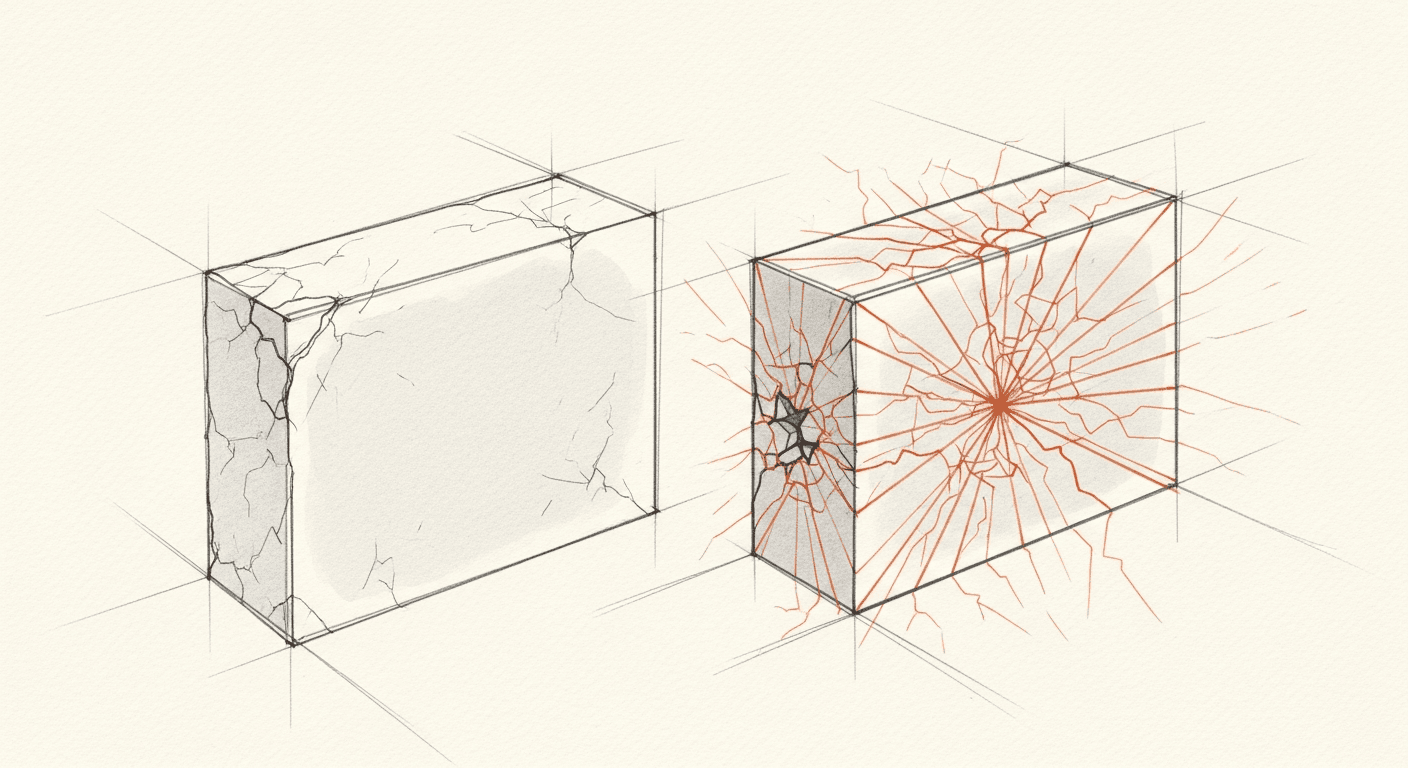
The guarantee is structural, not aspirational.
If you run a paid Protocol Build and your Indecision Rate has not dropped meaningfully within 120 days of build kickoff, 50 percent of your execution spend is refunded. Here is how the math works. Your baseline is computed at build kickoff, after the free Diagnosis. I pull 120 trailing days of pipeline data from your CRM and lock the average Indecision Rate across that window. You see it, I see it, it does not move. I measure again across days 30 to 120 after kickoff. The first 30 days of ramp are excluded so the comparison is honest. The threshold is the greater of a 10 percent relative drop or a 5 percentage-point absolute drop in the trajectory-weighted rate. The refund triggers only if the trajectory-weighted rate misses that threshold and the simple rate doesn't drop at all. The free Check, Scoping Call, and Diagnosis carry no fee and no guarantee. The guarantee tracks whether the paid build actually moved the number, which is why it rides on execution spend and why the baseline sits after the diagnosis. No subjective assessment. The math is the math.
START HERE FREE
I still got you.
Free Buyer Readiness Check
The free Buyer Readiness Check is 14 questions, self-serve, answered from your gut about your last ten deals. Four minutes. Scored instantly. You'll see a rough read across the four dimensions, the one most likely killing momentum, a rough estimate of your friction cost, and where to focus first. Most sales leaders take the free Check before booking their free scoping call.
YOUR PREP WORK
You are the fuel.
For your Diagnosis:
About one to two hours of CRM forensics before the Diagnosis: stakeholder counts on specific deals, procurement engagement timing, recommendation outcomes. The prep is part of what makes the diagnosis defensible. Asking these questions cold produces guesses. Asking them with the data in front of us produces a number you can act on.
01
For the Protocol Build:
Once you commission a build, we lock your baseline from 120 trailing days of CRM and you name an internal owner. A 15-minute kickoff, your reps confirm they have the protocol assets, and your owner sits the day-30 checkpoint. The guarantee runs on that discipline.
02

Metric 1: Indecision Rate
The percentage of your pipeline stalling on buyer indecision rather than competition. The metric DecisionScope owns. The metric the guarantee tracks.
Metric 2: Stalled-Deal Resurrection Rate
How often deals that disengaged come back into active sales motion after the protocols are applied. The fast-cycle proof.
Metric 3: Forecast accuracy
Whether the deals your reps call "committed" actually close. Indecision is the largest source of forecast slippage at most B2B teams. Reduce it and accuracy moves.
Metric 4: No-decision loss rate
The percentage of lost deals where the buyer chose nothing instead of choosing your competitor. This is the number underneath win rate. Cleaner because it isolates indecision from pricing, ICP fit, and competitor moves.
Compare Options
Option
Price
Sessions with Wilton
Your prep time
Deliverable
Guarantee?
Free Buyer Readiness Check
Free
0 (self-serve)
~4 min
Four-dimension read
No
Scoping Call + Diagnosis
Free
1 call + 1 session + Readout
~1–2 hrs
Your Indecision Rate + the RED link
No
Protocol Build
From $10,000
Build, delivery, day-30 checkpoint
Named owner + kickoff
Built protocol, assets, pitch kit
Yes. 50% of execution spend back if the rate hasn't dropped by the threshold by day 120.
Full-Chain Build
Inquire
Build, delivery, day-30 checkpoint
Named owner + kickoff
All four links resolved + assets
Yes. Same 50% guarantee.
FREQUENTLY ASKED
What does it cost?
The Check, the Scoping Call, and the Diagnosis are free. You only pay for the Protocol Build, the done-for-you fix. It is priced as a fraction of one of your own average deals, a quarter for a single RED link up to half for the full chain, starting at $10,000. Recovering one stalled deal more than covers it. You never get a number before the Diagnosis produces your deal value and your RED-link count.
What happens after the build?
Optional Sustained Resolution. Ongoing re-scoring and protocol tuning against your locked baseline, from $5,000 a month. Available by conversation after your build, not required.
Why does the Diagnosis require pre-work?
Because some questions can only be answered defensibly with CRM data. Stakeholder counts across specific deals. Procurement engagement timing. Recommendation outcomes. Asking these cold produces guesses. The pre-work is what separates a real diagnosis from a gut read. It is also why the Diagnosis is worth doing even though it is free.
Why isn't the Diagnosis covered by the guarantee?
The Diagnosis tells you what is broken. The guarantee tracks whether the fix worked. You cannot guarantee a fix you have not built. The guarantee rides on the paid Protocol Build, where the work that moves the number actually happens. It refunds 50 percent of your execution spend if the number hasn't dropped by the threshold in your agreement.
What's the Trajectory-Weighted Indecision Rate?
The metric DecisionScope owns. It measures the percentage of your pipeline stalling on buyer indecision rather than competition, weighted by how long and which way each deal is moving. A deal stalled sixty days at the same stage counts more than one stalled fifteen. The weighting stops the rate from being gamed by recent pipeline additions or quick disqualifications. The Simple variant is the headline you can verify by counting deals; the Trajectory-Weighted variant is the one the guarantee runs on.
How is the baseline computed, and when is it locked?
At build kickoff, after your free Diagnosis, I pull 120 trailing days of pipeline data from your CRM and compute the average Indecision Rate across that window. That is your baseline. It is locked at kickoff and shared in writing within five business days, before any protocol work begins. Locking it after the free Diagnosis matters: the diagnosis already moved the number, so the guarantee covers only the lift from the paid build. You know exactly what we are trying to move. I cannot move the goalposts.
What does a meaningful drop actually mean?
The greater of a ten percent relative drop or a five percentage-point absolute drop, measured across days 30 to 120 from kickoff. For a baseline Indecision Rate of 50 percent, the threshold is 45 percent. For a lower baseline of 30 percent, the absolute floor protects the math: the threshold is 25 percent, not 27. For a higher baseline of 80 percent, the relative bound binds: the threshold is 72 percent. And the refund is owed only if the trajectory-weighted rate misses that threshold and the simple rate doesn't drop at all. Any real improvement means no refund.
When can I get a price?
After the Diagnosis, not before. The price is a fraction of your deal value, the average closed-won deal value in the last 120 days of your CRM, and I don't know that number or how many links are RED until the Diagnosis runs on your pipeline. That is deliberate. A number quoted before the diagnosis is a guess, and you would be right not to trust it.
Who is this for?
B2B founders and revenue leaders at companies between $10M and $100M in revenue with a sales-led process, where more than half of losses end in "no decision." VPs of Sales, Chief Revenue Officers, founders running their own pipeline. You need a CRM I can read. The guarantee also needs at least 30 deals with real buyer activity in the 120 days before your Build starts, so the measurement rests on enough deals to be fair to both of us. With fewer, the Build still runs. It runs without the guarantee.
Who is this not for?
Sales leaders who want a coaching engagement, a content audit, or a tech-stack recommendation. DecisionScope diagnoses one specific problem, buyer indecision, and prescribes interventions for it. If your problem is something else, this isn't the right tool.