AI Just Doubled Your Buying Committee. Your Process Has Not Caught Up.
Organizational Readiness
AI-featured B2B purchases double the buying committee and rewrite how it decides while the deal is live. The committee that signs is not the one you pitched. Most sellers still work the week-one map. Organizational Readiness measures whether the seller noticed the room change, and whether the group can still decide.

By Wilton Blake, B2B Decision Strategist
17 years in B2B. Now diagnosing why qualified pipeline loses to no decision.
Key Takeaways
AI-featured purchases double the size of the buying group (Forrester 2026).
54% of buying groups are evolving their decision-making model mid-process (Demandbase 2025).
Win rates peak at 4-5 stakeholders and decline past six, so doubling pushes groups past the decision wall (Bröntén & Cabrera 2025).
74% of buying teams operate in unhealthy conflict; consensus groups are 2.5x more likely to report a high-quality deal (Gartner 2025).
Durable group decisions come from one shared frame, not thirteen separate pitches (DeChurch & Mesmer-Magnus 2010).
The deal felt clean. Strong discovery, a champion who got it, a buying group you could draw on a napkin: an economic buyer, a technical evaluator, two users, procurement waiting at the end. Five people. A shape you've closed a hundred times.
Then it slowed. Not died. Slowed.
New names appeared on the thread. A security reviewer nobody mentioned. Someone from data governance. A second VP who "just wants to understand the AI piece." Your champion started saying "we" where they used to say "I." The napkin you drew in week one stopped describing the room.
That is not a discovery failure. It is a 2026 failure. And it's running quietly on most of your deals right now.
What actually changed is the size of the room
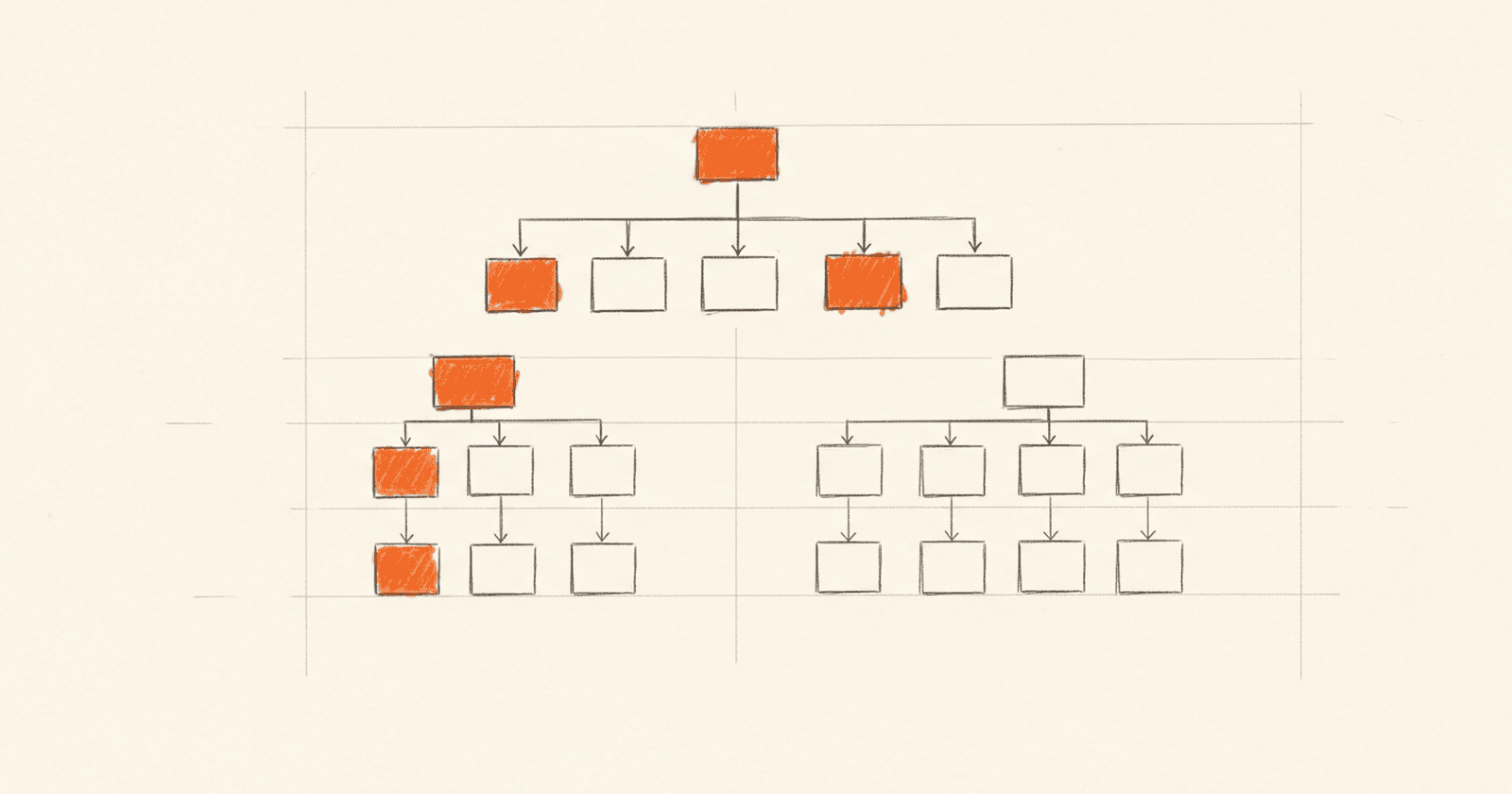
Forrester's 2026 State of Business Buying puts the average B2B buying group at thirteen internal stakeholders and nine external participants. Then it reports the number that should reset how you sell: when a purchase involves AI features, the buying group doubles in size.
Doubles. Not grows. Doubles.
Here's the thesis, and it's worth quoting back to yourself before your next pipeline review: the committee that signs your deal is not the committee you pitched. AI made the room bigger, and most sellers are still selling to the people they met in week one.
The reason this slips past you is that it doesn't announce itself. Nobody sends a calendar invite titled "the buying group has doubled." The names just accrete. A reviewer here, an approver there, a function you didn't know had a vote. By the time the shape is obvious, the proposal is already written for the old shape.
And the room will not hold still
Bigger would be manageable if it held still. It doesn't.
Demandbase's 2025 buyer research found that 54% of buying groups are actively evolving their decision-making model in the middle of the process. Not before the process. During it. The rules for how the decision gets made are being rewritten while you're trying to win the decision. Seventy-two percent of these groups are high-complexity, spanning ten distinct decision-maker functions.
So the committee at signature is not the committee at outreach. It's bigger, more functionally diverse, and running on a process that didn't exist when you sent your first email. Your champion's internal map went stale at the same rate yours did. They're carrying a room they no longer fully understand either.
This is the part nobody talks about. Sellers obsess over whether they have a champion. Almost nobody asks whether the champion still recognizes their own buying group.
Bigger is not harder. It is past the wall.
The instinct is to treat a larger group as the same job, scaled up. More stakeholders, more meetings, more effort. Grind it out.
The data says the relationship isn't linear. It has a cliff.
Bröntén and Cabrera's 2025 analysis found that B2B win rates peak at four to five stakeholders, then fall off past six. Not flatten. Fall. The group doesn't get proportionally harder as it grows. It hits a size where it stops being able to reach a decision at all.
So look at what AI did to your deal. It didn't just add names. It pushed the group past the count where groups still close. The doubling is not a degree of difficulty. It's a change in kind. You're no longer working a harder version of the same deal. You're working a deal that, at its current size, is built to stall.
The room is also at war
Now add the temperature.
Gartner's 2025 survey of B2B buyers found that 74% of buying teams operate in unhealthy conflict during the decision. Three out of four. And the groups that do reach consensus are 2.5 times more likely to call the purchase a high-quality decision. The split is brutal. Most groups are fighting. The ones that align are the ones that buy well, and feel good about it after.
Your champion is standing in the middle of that fight. The person you equipped to carry the deal is now refereeing a bigger, more divided room with a decision process that keeps shifting under them. You handed them a one-page business case built for five people. They're walking it into a room of thirteen who don't agree on what they're deciding.
This is where it shows up in the forecast. Eighty-six percent of B2B purchases now stall, and 81% of buyers end up dissatisfied with the provider they finally choose, per Forrester. Those are not competitor losses. That's the sound of buying groups that got too big, too fast, too divided to decide well. The deal doesn't go to someone else. It goes nowhere, and the buyer ends up unhappy with wherever it lands.
The fix is not more pressure. It is noticing the room changed.
Most sellers respond to a slowing deal by working the original map harder. More touches to the economic buyer. A sharper deck for the champion. Executive air cover to "create urgency." All of it aimed at the committee from week one. None of it aimed at the committee that exists now.
The fix is not more force on the old map. It's noticing the map changed.
That is the question Organizational Readiness measures. Not "do we have a champion." Not "is the deal multi-threaded." It asks something sharper: does the seller know who is actually in the room today, and can this group, at its current size and temperature, reach a decision at all? Multi-threading tells you to talk to more people. It doesn't tell you the room doubled, or that the new shape is past the size where groups close. That gap is exactly where qualified deals quietly go to no decision.
This is the seam every sales methodology leaves open. MEDDIC, BANT, Challenger, all of them tell you how to advance an evaluation. None of them measure whether the evaluation you're advancing is still being run by the same group, in the same way, that it was three weeks ago. The diagnostic does. It treats the buying group as a moving target, because in 2026 it is one.
Why one champion is no longer enough
For a decade, the advice was simple. Find a champion. Arm them. Let them carry it.
That advice was built for a five-person room. It doesn't survive a thirteen-person one.
A single champion can still get a deal moving. They cannot, on their own, close it, because closing a large group is not an act of persuasion. It's an act of alignment, and alignment is a property of the whole group, not of one person inside it. You can have the most committed champion in the building and still lose, because the room around them never reached a shared understanding of what they were buying.
The decision science is direct about what actually moves a group. DeChurch and Mesmer-Magnus, in a meta-analysis across twenty-three studies, found that groups make durable decisions when their members share a structured understanding of the problem and of each other's roles. One shared frame across the committee. Not thirteen separate sales conversations stacked on top of each other.
So the work shifts. You stop trying to win thirteen people one meeting at a time, because that doesn't scale and the research says it doesn't work. You equip your champion to build a shared frame inside a moving target. You give them the language to bring the security reviewer who appeared in week six up to speed without restarting the whole evaluation. You help them surface the new VP's real question instead of letting it sit on the thread as silent risk. You make the cost of the group's own indecision visible to the group, not just to your forecast.
Three questions that surface it in a thirty-minute pipeline review
You don't need a new system for this. You need three questions, asked about every deal of size, inside the pipeline review you already run.
Who is on the buying group today, and how many of them weren't there at outreach? If the rep can't answer, you've found the gap. They're forecasting a deal whose room they can't describe.
Has the way this group makes the decision changed since you got in? If a new function joined, a new approval appeared, or "they're still figuring out the process" comes up, the answer is yes, and the plan on file is built for a process that no longer exists.
If your champion went silent tomorrow, who else in that room could carry it? If the honest answer is no one, you don't have Organizational Readiness. You have a single point of failure on a group that just doubled.
None of this is about working harder. It's about diagnosing what AI actually did to your deal before you prescribe a fix for it. The seller who notices the committee doubled, and adjusts to the room that exists, takes the group that the seller still working the 2019 map is about to lose.
Your buyer's room changed somewhere between outreach and the proposal. It got bigger, more divided, and harder to read, and it did it without telling you. The only question that matters now is the one your forecast can't answer for you: did you notice before the proposal landed?
If you want to see where your live deals stand on Organizational Readiness and the three other dimensions that decide whether a deal closes or stalls, the four-minute readiness check is the fastest place to start, and the full buyer readiness framework lays out all four.
FAQ
Does AI make B2B buying committees bigger?
Yes. Forrester's 2026 State of Business Buying found the average B2B buying group already spans thirteen internal stakeholders and nine external participants, and that buying groups double in size when the purchase involves AI features. The increase is not just headcount. Demandbase's 2025 research found 72% of buying groups are high-complexity, spanning ten distinct decision-maker functions, so the larger group is also more functionally diverse and harder to align than the group most sellers still map.
Why do larger B2B buying committees stall?
Because group decision-making has a ceiling. Bröntén and Cabrera's 2025 analysis found B2B win rates peak at four to five stakeholders and decline past six, so a doubled committee is often pushed past the size where groups can reach a decision at all. Gartner's 2025 research adds that 74% of buying teams operate in unhealthy conflict, while consensus groups are 2.5 times more likely to report a high-quality decision. Size plus conflict, not competition, is what drives the 86% of purchases that now stall.
How do you sell to a buying committee that keeps changing mid-process?
Stop selling to the map you drew at outreach. Demandbase found 54% of buying groups evolve their decision-making model during the process, so the committee at signature is not the one you pitched. The move is to build one shared frame across the whole group rather than persuade each stakeholder separately, which a meta-analysis by DeChurch and Mesmer-Magnus found is what produces durable group decisions. Equip your champion to onboard new members without restarting the evaluation, and surface new questions before they become silent risk.
What is Organizational Readiness in B2B sales?
Organizational Readiness is one of the four dimensions of buyer readiness. It measures whether the buying organization can actually reach and execute a decision: whether the seller knows who is in the room today, whether the group has the alignment to converge, and whether the deal can survive the loss of any single champion. It is distinct from qualification. A deal can be fully qualified on paper and still fail Organizational Readiness because the group, at its current size and temperature, cannot decide.
Blog