Why 56% of Your Qualified Deals Die Before Anyone Says No
Field Notes
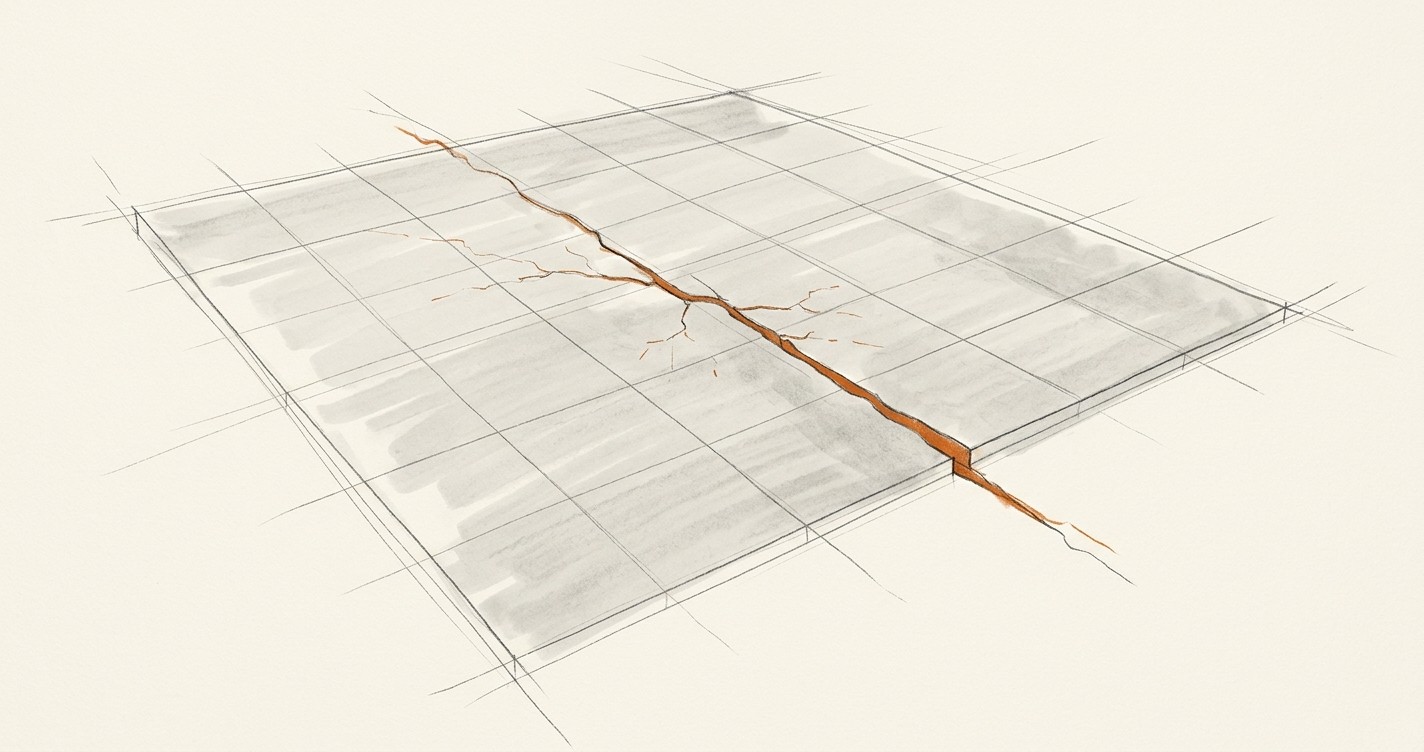
Most qualified B2B deals that end in no decision are not lost to competitors. Fifty-six percent of inaction losses come from buyer indecision, not status quo preference. The deals dying in your forecast were never lost to anyone. They were never finished. Here is the diagnosis your methodology cannot make, and the four dimensions every late-stage deal silently fails on.

By Wilton Blake, B2B Decision Strategist
17 years in B2B. Now diagnosing why qualified pipeline loses to no decision.
Key Takeaways
Fifty-six percent of B2B inaction losses come from buyer indecision, not status quo preference (Dixon & McKenna, HBR 2022, from 2.5 million sales conversations). Eighty-six percent of B2B purchases stall during the buying process (Forrester, 2024).
The silence after a good demo has a name in the literature: information avoidance (Golman, Hagmann & Loewenstein, 2016, 608 citations). It reverses only when the buyer perceives accurate information AND sees a clear mitigation path (Cavlovic et al., 2024).
The four buyer-readiness dimensions form a chain: Problem Conviction, Evaluation Clarity, Outcome Confidence, Organizational Readiness. The deal moves at the speed of the weakest link.
Pressure tactics on indecisive buyers degrade win rates by eighty-four percent. Seventy-three percent of sellers push anyway (Dixon & McKenna, 2022). The fix is not effort. The fix is diagnosis.
2026 made the diagnosis urgent: buying committees grew to 11.2 stakeholders on deals over fifty thousand dollars, generative AI collapsed the information cost without reducing the decision cost, and CFOs are scrutinizing every line item (Forrester, 2026).
Your Biggest Competitor Isn't a Company. It's an Unfinished Decision.
It is Tuesday morning. The VP of Sales pulls up his forecast review.
Eleven deals are sitting at sixty percent probability or higher. The quarter closes in six weeks. He needs five of them to make number.
He has been here before.
Last quarter's shape
Last quarter he had nine deals at sixty percent or higher at the same point in the cycle. Two closed. Six died with no email, no objection, no formal "we went another direction." Just silence. One closed three months late, after the quarter was already booked as a miss.
His CRM logged the six silent losses as competitive losses. He knows that is not what happened. He knows nobody won them.
He just does not yet have language for what actually did.
The mechanic the dashboard cannot see
The deals did not go to a competitor. The deals stopped moving because the buyers on the other side never finished making the decisions a purchase requires. Nobody picked another vendor. Nobody picked anyone. The deals went silent because the work on the buyer's side stalled in a place no playbook in his GTM stack is built to detect.
His biggest competitor is not a company. It is an unfinished decision.
The Misdiagnosis That's Costing You Pipeline
The B2B sales world treats lost deals as a binary: either the buyer chose a competitor, or the buyer chose the status quo. Both categories miss the actual failure mode of most stalled pipelines.
What the research actually says
Independent studies converge on a single finding:
Fifty-six percent of B2B inaction losses come from buyer indecision. Forty-four percent come from status quo preference (Dixon & McKenna, Harvard Business Review, 2022, drawn from analysis of 2.5 million sales conversations at Tethr).
Eighty-six percent of B2B purchases stall during the buying process. Eighty-one percent of buyers are dissatisfied with the provider they ultimately choose (Forrester, State of Business Buying, 2024).
Eighty-seven percent of B2B opportunities contain moderate-to-high levels of indecision (Dixon & McKenna, 2022).
Finding a decisive buyer in your pipeline is the exception, not the norm.
Why the misdiagnosis matters
If you label a silent loss as "competitive," you build the wrong fix. You buy a new battlecard. You hire a competitive intelligence analyst. You spend the next quarter teaching reps to differentiate against vendors the buyer never actually compared you to.
If you label a silent loss as "status quo preference," you build a different wrong fix. You buy a cost-of-inaction calculator. You train reps to manufacture urgency. You push harder. The deal dies anyway.
The deal did not lose to a competitor. The deal did not lose to the status quo. The deal stalled because the buyer never finished the four internal decisions that make a purchase possible.
It is not that nobody won. It is that nobody finished.
The Silence After the Good Demo Has a Name in the Literature
The pattern reps describe most often as "the deal went dark" has a precise name in the decision-science literature: information avoidance.
What buyers do when the decision is hard
In a canonical review with more than six hundred citations, Golman, Hagmann, and Loewenstein documented that people actively avoid free, useful information when receiving it would threaten existing beliefs or force a difficult decision (Golman, Hagmann & Loewenstein, Journal of Economic Literature, 2016). The mechanism is not laziness. It is the cognitive cost of running a high-stakes decision to completion in conditions of uncertainty.
The B2B sales translation:
The demo went well.
The references checked out.
The pricing is inside budget.
The proposal is in the buyer's inbox.
And the buyer stops opening the proposal. She moves the follow-up emails to a folder she does not check. The internal Slack channel where she had been pinging her team about the project goes quiet.
The buyer is not stalling because she did not get the information. She is stalling because she got the information and the decision became too costly to run.
What ends the avoidance
A 2024 study identified the conditions under which information avoidance reverses (Cavlovic et al., Journal of Risk and Uncertainty, 2024). Two conditions, together, are required:
The buyer perceives the information as accurate.
The buyer can see a clear mitigation path.
Vague evidence without a clear remedy produces avoidance. Specific evidence paired with a specific remedy produces engagement.
This is the mechanism beneath most "the deal went dark" patterns. The seller delivered accurate information. The seller did not deliver a clear mitigation path the buyer could carry into her own organization. The deal did not stall on evidence. The deal stalled on the missing path.
Four Gaps. Four Ways a Deal Dies.
The four-dimension buyer readiness model names the specific gaps that produce indecision. Every deal in your pipeline sits on top of these four buyer decisions. When a deal stalls, one or more of them was never completed.
Problem Conviction
The buyer must believe she has the problem you solve, and that staying the same is more painful than changing.
You recognize this when a prospect says "this is really cool" but cannot describe what staying the same is costing her. Common signals:
The buyer talks about your product in the abstract, not in connection to a current internal pain.
The buyer cannot name a specific event in the last ninety days that made this a problem.
The buyer's stakeholders, when interviewed separately, give different descriptions of the problem.
A meta-analysis of 607 estimates across 150 articles in economics, psychology, and neuroscience puts the mean loss-aversion coefficient between 1.8 and 2.1 (Brown et al., 2020). In B2B, that means the buyer needs to feel a loss roughly twice the magnitude of any gain you are promising before she will move. Without Problem Conviction, every gain you promise is being weighed against zero perceived loss.
Evaluation Clarity
The buyer must have a decision framework she trusts, before she opens her evaluation.
You recognize this when a buyer agrees the demo was "really helpful" but cannot tell you what she is comparing you against or what would make her say yes. Common signals:
The buyer asks for "more options" without naming the comparison criteria.
The buyer downloads three competitor demo recordings and ranks them on a spreadsheet of features instead of outcomes.
The buyer's "evaluation team" cannot agree on what success would look like.
Buyers experiencing contradictory or overwhelming information are 153 percent more likely to settle for a smaller, less ambitious solution than originally planned (Gartner / Adamson, 2019). Without Evaluation Clarity, the buyer narrows the deal until it is no longer the one you scoped.
Outcome Confidence
The buyer must be able to picture the specific outcome she needs, in a form she can recognize, six months past the purchase.
You recognize this when a prospect spends the entire demo asking about integrations, onboarding timelines, or edge cases specific to her setup instead of evaluating business impact. Common signals:
The buyer asks the same integration question three times in three different framings.
The buyer requests a fourth reference call after three have already happened.
The buyer opens the proposal twice and never returns to it.
Setting outcome expectations early and explicitly improves win rates by 155 percent, yet this behavior appears on only 19 percent of sales calls (Dixon & McKenna, 2022). It is the highest-impact, most underused move in B2B sales. The Outcome Confidence stall is the dimension most often misdiagnosed as "the buyer is still evaluating."
Organizational Readiness
The buyer must be able to actually get this done inside her organization.
You recognize this when a champion says "I need to run this by my team" and then goes silent for two weeks. Common signals:
The deal stalls at exactly the moment your champion needs to expand the buying group.
The procurement and security reviews run in parallel rather than sequence.
The deal has been "two weeks from close" for six weeks.
Buying decisions now involve a typical thirteen internal stakeholders plus nine external influencers, with that number rising for more complex or strategic purchases (Forrester, 2024). Gartner's 2025 sales survey of 632 buying groups found that 74 percent demonstrate unhealthy conflict during the decision process. Buying groups that achieve consensus are 2.5 times more likely to report high-quality deals (Gartner, 2024). Without Organizational Readiness, your champion is selling alone inside her company with none of your context and all of the internal politics.
The Weakest Link
These four dimensions are not independent checkboxes. They form a chain. Your deal moves at the speed of the weakest link.
The cascade failures are recognizable:
Conviction without Clarity. The buyer is energized and lost. She feels the problem acutely but has no framework for evaluating solutions. She retreats to the status quo she just admitted was broken.
Clarity without Confidence. The buyer has a decision framework and no reason to trust your specific solution inside it. She compares clearly and chooses someone else, or worse, she chooses nothing.
Confidence without Readiness. The champion believes in the product and cannot get internal approval. The deal dies because the organization cannot close, not because the buyer changed her mind.
One incomplete decision is enough to kill a deal. The failure mode is always the same: silence.
Why Selling Harder Backfires
The reflex when a deal stalls is to push. More urgency. More cost-of-inaction. More follow-up emails with "circling back" in the subject line. The reflex is wrong, and the research is unusually clear on the size of the wrongness.
The 84 percent backfire rate
Applying traditional pressure tactics to indecisive buyers degrades win rates by eighty-four percent (Dixon & McKenna, 2022). Seventy-three percent of sellers do this anyway.
The mechanism is straightforward. Pressure tactics work on a buyer whose primary blocker is the status quo. They are designed for "you have to act because waiting costs you." But the buyer who is stalling on indecision is not weighing change against the status quo. She is weighing change against being personally accountable for a change that might not work. Pressure on her makes the personal-risk dimension larger, not smaller. The deal does not move. The deal moves further away.
What the pressure tactics actually do
You see the pattern in the seller behavior more than in the buyer behavior:
The seller sends a fourth case study after the third one was already too many.
The VP of Sales jumps on the call to "create urgency," which the buyer reads as "the seller's quarter is in trouble."
The proposal gets re-sent with a discount the buyer did not ask for, which signals the original price was inflated.
The rep escalates to the buyer's CEO with a "should I be talking to someone else?" email, which terminates the relationship.
Each move is a rational response to "the deal is stalled and I need it to close." Each move is wrong for the actual mechanic, which is information avoidance produced by missing dimensions. None of them addresses the missing dimensions. All of them make the personal risk feel larger.
Why 2026 Made This Diagnosis Urgent
Forrester's 2026 Buyer Insights research found that generative AI is upending B2B buying just as procurement leaders face mounting pressure to justify every dollar spent (Forrester, 2026). The context has tightened in three ways.
Buying committees got bigger, not smaller
The promise of self-serve buying was that buying groups would shrink. They have grown:
Average buying committee size for deals over fifty thousand dollars climbed to 11.2 stakeholders in 2026, up from 9.7 in 2024 (Forrester / 6sense).
Typical buying decisions now include thirteen internal stakeholders plus nine external influencers (Forrester, 2024).
The internal sales process required to reach consensus across this many people has not yet been built into most B2B GTM motions.
More stakeholders means more places the Organizational Readiness dimension can break.
AI made the information layer cheaper and the decision layer harder
Generative AI has collapsed the cost of producing research, evaluation frameworks, and vendor comparison artifacts. The buyer can ask Perplexity for a five-vendor shortlist and get one in fifteen seconds. What AI has not done is reduce the cognitive cost of running the actual decision to completion. The buyer has more information than ever and the same amount of decision-making capacity she had before. The gap between information abundance and decision capacity is the precise condition Golman and colleagues identified as producing the highest rates of information avoidance.
CFOs are scrutinizing every line item
Tighter procurement scrutiny means more dimensions are exposed. The CFO who used to be a late-stage signoff is now a mid-stage gate. Her presence increases the surface area where Outcome Confidence and Organizational Readiness can fail.
The 2026 environment is not a small adjustment to the 2022 pattern. The 2026 environment is a multiplier on every dimension that was already failing in your pipeline.
What Changes When You Measure Readiness Before the Demo
The diagnostic move is simple. Run it before your next forecast review.
The closed-lost audit
Pull your last ten closed-lost deals. For each one, ask the rep who owned the deal:
Which of the four dimensions was incomplete when the deal went silent?
What specific signal would have surfaced it three weeks earlier?
What would the rep have done differently with that signal?
Most teams find that closed-lost deals cluster around one or two dimensions, not all four. The cluster is the structural fix for the quarter. It also surfaces the training the team actually needs, which is rarely "more product knowledge" or "better competitive positioning."
The pre-demo readiness gate
For every new opportunity entering the pipeline, score four numbers before the demo is scheduled:
Problem Conviction: does the buyer have a named cost of inaction in the last ninety days?
Evaluation Clarity: does the buyer have decision criteria she has written down?
Outcome Confidence: can the buyer name the specific report she will be running six months in?
Organizational Readiness: has the buyer mapped the buying group and identified the dissenting voice?
The numbers are not for the CRM. The numbers are for the rep, before the demo, so the demo can be calibrated to what is actually missing.
The Tuesday forecast question
In your next forecast review, ask the rep one question for every late-stage deal:
Which dimension is closest to incomplete on this deal, and what is the move this week to complete it?
If the rep cannot answer, the deal is not in evaluation. The deal is in invisible-stall. The forecast probability the CRM is showing is not real.
The connection back to the four-dimension diagnostic sits underneath this entire post. The pillar page goes deeper on each dimension and on the protocols that resolve each gap. The blog post you are reading names the failure. The pillar names the fix.
A Different Tuesday, a Different Question
Two quarters later, a different VP of Sales sits in a different forecast review.
He has eleven deals at sixty percent or higher. The quarter closes in six weeks. The shape is the same shape his predecessor watched die six quarters in a row.
He runs the review differently.
He does not ask "what is the next step." He asks "which dimension is closest to incomplete." He listens to each rep's answer. Three reps answer with specifics. Two reps answer with abstractions. One rep cannot answer at all.
He pulls the three deals where the rep answered with specifics into the must-close column.
He pulls the deals where the rep answered with abstractions into the at-risk column with a specific next move per deal (Tuesday-at-month-four question for the Outcome Confidence stalls, mock report for the buyers running unfinished mental simulations, champion-enablement work for the Organizational Readiness gaps).
He pulls the deal where the rep could not answer at all into the kill column. He tells the rep the work for the week is not to push the deal. The work is to find out which dimension was always going to break.
The reviews stop looking like activity reports and start looking like diagnoses.
By the end of the quarter, his close rate has not changed on the deals that were already in motion. His close rate has changed on the deals that entered the pipeline three weeks ago, because the diagnostic moved upstream from the forecast review to the qualification call.
Most of the deals dying in your pipeline right now are dying for one of four named reasons, not for the unnamed reason your CRM is recording as "competitive loss" or "no decision." If your last ten closed-lost deals contain three or more where the buyer went dark after a meeting that "went well," your pipeline has a buyer-readiness problem. Take the four-minute Readiness Check to score your category against the four dimensions. You will know which dimension is breaking first. That is the diagnosis. The plan for the quarter follows the diagnosis. The diagnosis does not follow the plan.
That is the work of the next forecast review. Not the next demo. Not the next round of competitive training. The next conversation, with the rep, about the dimension that has been dying in silence in every closed-lost deal this year, while the methodology refused to name it and the CRM kept logging it as "competitive loss."
The biggest competitor is still not a company. The biggest competitor is the unfinished decision sitting in eleven of your eleven late-stage deals right now, and the dimension on which each one is incomplete is the dimension you are about to learn to see.
FAQ
Why do qualified B2B deals end in no decision?
Most qualified B2B deals that end in no decision are not lost to competitors and are not lost to status quo preference. They are lost to buyer indecision, which is a distinct mechanism: the buyer never completed the four internal decisions a purchase requires. Fifty-six percent of B2B inaction losses come from indecision, not status quo preference (Dixon & McKenna, Harvard Business Review, 2022, from 2.5 million sales conversations). Eighty-six percent of B2B purchases stall during the buying process (Forrester, 2024). The buyer goes silent because she got the information and the decision became too costly to run, a pattern decision scientists call information avoidance (Golman, Hagmann & Loewenstein, 2016). The fix is not selling harder. The fix is measuring readiness before the demo.
What is the difference between buyer indecision and status quo preference?
Status quo preference means the buyer evaluated the change and decided that staying the same was better. The decision was made. Buyer indecision means the buyer never completed the decision in either direction. She did not pick the change. She did not pick the status quo. She just stopped responding. These two failure modes require fundamentally different interventions. Pressure tactics work on status quo preference and backfire on indecision. Applying pressure to an indecisive buyer degrades win rates by eighty-four percent (Dixon & McKenna, 2022). The diagnostic move is to ask: did the buyer voice a decision, or did the buyer go silent? Voiced decisions need objection handling. Silent decisions need readiness diagnosis.
What is buyer readiness in B2B sales?
Buyer readiness is the completion state of the four internal decisions a buyer must make before a B2B purchase can close: Problem Conviction (does she believe she has the problem you solve), Evaluation Clarity (does she have a decision framework she trusts), Outcome Confidence (can she picture the specific outcome six months in), and Organizational Readiness (can she actually get this done inside her organization). A deal moves at the speed of the weakest dimension. Three maxed dimensions plus one incomplete equals a dead deal. Buyer readiness is not a sales methodology. It is the diagnostic layer that sits beneath MEDDIC, BANT, Challenger, and SPIN, and it answers the question those methodologies do not: not "is this deal qualified" but "is this buyer ready to complete the decision a purchase requires."
Can buyer readiness be measured before the first demo?
Yes, and it should be. The qualification call is the right place to score the four dimensions, not the forecast review. Before the demo, ask: does the buyer have a named cost of inaction in the last ninety days (Problem Conviction); does she have written decision criteria (Evaluation Clarity); can she name the specific report she will be running six months in (Outcome Confidence); has she mapped the buying group and identified the dissenting voice (Organizational Readiness). The four numbers are not for the CRM. The numbers are for the rep, so the demo can be calibrated to what is actually missing. Most demos fail not because the product was wrong, but because the demo was calibrated to a dimension that was already strong and ignored the dimension that was weak.
Does pushing harder on stalled deals actually work?
The research is unusually clear: pushing harder backfires. Applying traditional pressure tactics to indecisive buyers degrades win rates by eighty-four percent (Dixon & McKenna, Harvard Business Review, 2022, from 2.5 million sales conversations). Seventy-three percent of sellers push anyway. The mechanism is that pressure tactics work on a buyer who is weighing change against the status quo, not on a buyer who is weighing change against personal accountability for a change that might not work. Pressure makes the personal-risk dimension larger, which is the opposite of what the buyer needs. The intervention that actually works is to diagnose which of the four dimensions is incomplete and address it directly. Setting outcome expectations early and explicitly improves win rates by 155 percent (Dixon & McKenna, 2022). That behavior appears on only 19 percent of sales calls. The fix is not effort. The fix is diagnosis.
Blog