Why B2B Deals End in No Decision (And How to Diagnose It Before It Happens)
Field Notes
B2B deals end in "no decision" when a qualified buyer stalls instead of choosing you or a competitor. It is the single largest category of pipeline loss, 40 to 60 percent of qualified deals. The cause is rarely sales execution. It is unmeasured buyer readiness: the buyer was never ready to decide, and nobody scored it. DecisionScope is the diagnostic that scores it, across four dimensions, before the deal stalls.

By Wilton Blake, B2B Decision Strategist
17 years in B2B. Now diagnosing why qualified pipeline loses to no decision.
Key Takeaways
No decision, not the competition, is where most qualified B2B pipeline dies. Research puts it at 40 to 60 percent of qualified deals (Dixon & McKenna, HBR 2022).
A no-decision loss is not a lost sale to a rival. It is a buyer who stalled. That distinction changes the entire fix.
Roughly 56 percent of no-decision losses come from buyer indecision, fear of messing up, not from a buyer who loves the status quo.
Your CRM measures the deal. It does not measure the buyer. Qualification frameworks like MEDDIC score conditions, not readiness.
DecisionScope measures buyer readiness across four diagnosable dimensions. The deal moves at the speed of the weakest one.
Indecision is not a personality. It is a documented behavior, and it responds to structure. A multicenter randomized trial watched a decision aid drop the share of people stuck at "unsure" from 58 percent to 14 percent (Ladin et al., 2022).
The pipeline review starts at nine. Forty-one deals on the board. The one everybody believed in sits near the top, marked 80 percent, a 180,000 dollar deal that had a great demo six weeks ago. The VP scrolls to it and waits for the rep to give the update.
There is no update.
No competitor won it. No budget got cut. The buyer who called the product "exactly what we need," who said it twice, who looped in their team, just stopped. No reply, no callback, no next step. The yellow bar still says 80 percent. The deal is dead and the CRM is the last to know.
That is a no-decision loss. And if it feels familiar, it should, because it is the most common way B2B deals die, and almost nothing in your sales stack was built to see it coming.
What "no decision" actually means
A no-decision loss is a qualified deal that stalls into inaction. The buyer does not choose you. The buyer does not choose a competitor. The buyer chooses nothing, and the deal dies in place.
This is the part most teams get wrong. They file no-decision losses next to competitive losses, as if a deal that went to a rival and a deal that went nowhere are the same kind of failure. They are not. A competitive loss means the buyer decided and picked someone else. A no-decision loss means the buyer never decided at all. One is a selling problem. The other is a readiness problem. Treat them the same and you will keep applying competitive fixes to a problem that has no competitor in it.
Here is the scale of it. Across qualified B2B pipeline, 40 to 60 percent of deals end in no decision, not a competitor win (Dixon & McKenna, HBR 2022). That is the largest single category of loss in most pipelines. Bigger than any rival. Often bigger than every rival combined.
Most revenue leaders cannot tell you their no-decision rate. It hides inside the gray bucket of "closed lost," undifferentiated, unexamined. Separating it out is the first honest thing you can do, because you cannot fix the shape of a problem you refuse to measure.
The two engines behind it
No decision runs on two engines, and they are not the same.
The first is status quo preference. The buyer looks at the cost and effort of change, looks at what they have, and decides doing nothing is safer. This is the engine everyone assumes is at work. It is the smaller one.
The second is indecision. Not love of the status quo. Fear of getting the choice wrong. The buyer wants to move, sees the upside, and freezes because the downside of a bad decision feels worse than the slow bleed of no decision at all. Of all no-decision losses, roughly 56 percent trace to indecision, not status quo bias (Dixon & McKenna, HBR 2022). The fear of messing up beats the fear of missing out.
There is a name for what happens next, and it is not in your CRM. When new information threatens a belief or forces a hard call, people actively avoid it, even when the information is free and useful. That is the canonical finding on information avoidance (Golman, Hagmann & Loewenstein, Journal of Economic Literature, 2016). It is why the buyer who loved your demo stops opening your emails. They are not being rude. They are avoiding a decision that now feels risky, and silence is the cheapest way to do it.
This matters because the two engines need opposite fixes. Status quo bias needs you to make the cost of inaction real, which is its own discipline worth a full diagnosis on its own. Indecision needs you to make the decision feel safe and clear. Run the wrong fix and you make the freeze worse. Push harder on urgency with a buyer who is already overwhelmed, and you do not unstick them. You scare them into the gray bucket.
Your CRM measures the deal, not the buyer
Now stack the consequences, because no-decision losses are not a single dead deal. They are a tax on everything.
Your forecast inflates with deals that look real and were never going to close. Your board loses confidence when the quarter comes in under a number you swore by. Your best rep, the one carrying three of those 80 percent deals, starts to wonder if the territory is broken and updates their resume. And you keep paying to generate more pipeline, top of funnel, more demos, to replace deals that died of a problem more volume will never solve.
You have tried the obvious fixes. Better decks. New scripts. A sales consultant. Tighter follow-up cadence. Upgraded CRM scoring. The numbers did not move, and here is why.
Every tool you reached for measures the deal. None of them measures the buyer.
Qualification frameworks are condition checklists. MEDDIC confirms there is a metric, an economic buyer, a decision criteria, a decision process, an identified pain, a champion. Useful. But every one of those can be true while the buyer is still completely unable to decide. Qualification measures whether the deal conditions exist. It does not measure whether the buyer can act on them. That gap is exactly where no decision lives. Your rep is not selling at the start of the buying process anyway. By the time they get the meeting, the buying group is already deep into its decision (6sense, 2025), and 67 percent of buyers prefer to evaluate without a rep involved (Gartner, 2026). Peer-reviewed case research is blunter about it. Vendor engagement timed before the buyer has surfaced their own need simply misfires (Andersson et al., 2024). They are closing the conversation they already had with themselves.
So the question is not "how do we sell this better." The question is "was this buyer ever ready to decide, and how would we have known."
That readiness has a name. And it has a shape.
The four dimensions where deals actually stall
Buyer readiness is not one thing. It is four, and a deal can be strong on three and dead on the fourth. This is the part qualification cannot see, because qualification was never built to look at the buyer's internal state. It looks at the deal's external conditions.
Here are the four dimensions, each with the moment you can recognize it in the wild.
Problem Conviction. Does the buyer believe they have the problem you solve, urgently enough to act? The tell is the prospect who calls your product "really cool" but cannot tell you what staying the same is costing them. Curiosity is not conviction. Deals die on admiration instead of action when this dimension is empty.
Evaluation Clarity. Does the buyer know how to evaluate a solution like yours? When buyers lack a decision framework, they default to comparing features and price, which flattens your differentiation and stalls the choice. Overwhelmed buyers settle for less or settle for nothing. And more information makes it worse, not better. A meta-analysis of thirty-one experiments found that both more diverse and more repetitive information degrade decision quality (Hwang & Lin, 1999). The fix is not more information. It is a framework they trust before evaluation starts.
Outcome Confidence. Does the buyer believe your solution will deliver in their specific environment? The tell is the prospect who spends every call asking about integrations, onboarding timelines, and edge cases unique to their setup. Excitement got them to the demo. Confidence is what closes, and when it is missing, the deal lingers in evaluation forever.
Organizational Readiness. Can the buying group actually move? The average B2B buying group now runs around 13 internal stakeholders (Forrester, 2026). More is not the problem you think it is, though. Win rates actually peak at four to five stakeholders and decline past six (Brontén & Cabrera, 2025). Your job is not to align all thirteen. It is to equip the four or five who decide. The tell is the champion who says "I need to run this by my team" and then goes silent for two weeks, because they got asked a question they could not answer in a room you will never enter. That is an equipment problem, not a content problem.
No conviction. No clarity. No confidence. No consensus. Each one, on its own, is enough to stall a deal that looks healthy on every other axis.
The weakest link is the whole deal
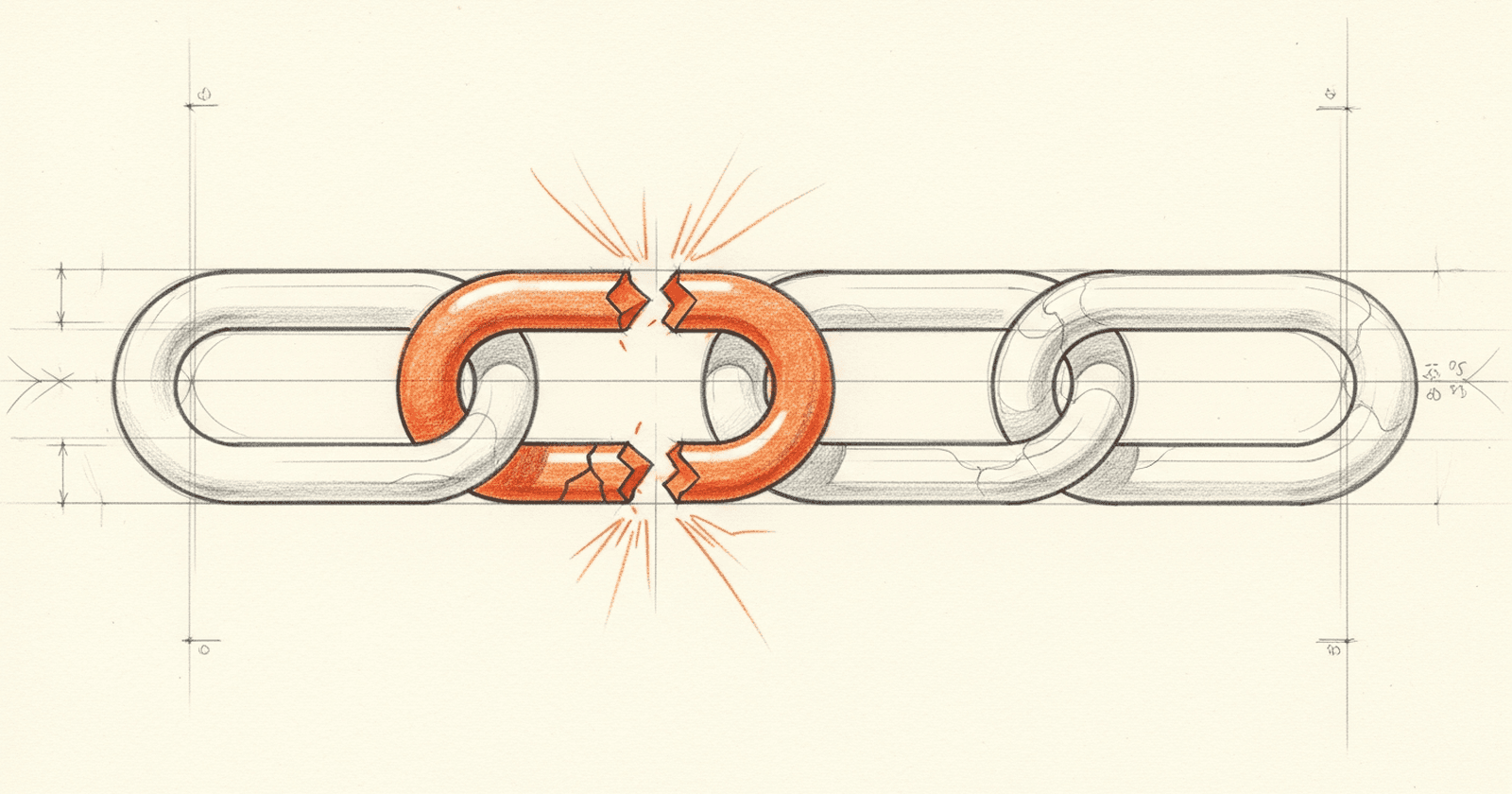
The four dimensions form a chain. The deal moves at the speed of the weakest link.
This is the principle that breaks the qualification habit. A deal can have maxed Problem Conviction, maxed Evaluation Clarity, maxed Outcome Confidence, and one incomplete dimension, and that one gap is enough. Three strong dimensions plus one empty one does not average out to a pretty-good deal. It equals a dead one. The chain does not care how strong its other links are.
This is why "the buyer loved it" and "the deal still died" are not a contradiction. The buyer loved three links. The fourth one snapped. And because qualification scored the deal as healthy on the conditions it could see, nobody was looking at the link that actually failed.
Find the weakest link before the deal stalls, and you are no longer guessing. You are diagnosing.
How to diagnose it before it happens
Here is the move, in three steps you can start this week.
First, separate your no-decision losses from your competitive losses. Open your closed-lost deals from the last two quarters. Sort the ones that went to a rival from the ones that went nowhere. The size of that second pile is your real problem, and most teams are shocked by it.
Second, score the buyer, not just the deal. For every active deal past discovery, run it against the four readiness dimensions and find the one scoring lowest. That is your weakest link. That is where the deal will die if nothing changes. The DecisionScope buyer readiness framework exists to make this fast and repeatable instead of a gut call.
Third, run the protocol that matches the gap. Each dimension has a specific resolution, and they are not interchangeable.
The Urgency Protocol resolves low Problem Conviction. It builds the case for change before the first real sales conversation, so the buyer owns the cost of inaction in their own numbers.
The Framework Protocol resolves weak Evaluation Clarity. It hands the buyer a decision framework they trust before the evaluation begins, so they stop defaulting to features and price.
The Proof Protocol resolves missing Outcome Confidence. It delivers implementation evidence and reference architecture tailored to their environment, before the deal reaches the edge-case spiral.
The Alignment Protocol resolves shaky Organizational Readiness. It equips the champion to sell in the rooms you will never enter, before the deal stalls in committee.
None of this is wishful. Structured decision support is one of the most replicated findings in decision science. A review of 246 studies found that decision aids reliably cut decisional conflict, the exact state your stalled buyer is sitting in (Garvelink et al., 2019). A multicenter randomized trial watched a structured aid drop the share of people stuck at "unsure" from 58 percent to 14 percent (Ladin et al., 2022). And the mechanism is known: give a person accurate evidence and a visible path forward, and the information avoidance that was freezing them starts to dissolve (Cavlovic et al., 2024). Diagnose the gap, run the matching protocol, and you are working with the grain of how people actually decide.
Notice what DecisionScope is not. It is not a sales methodology. It does not replace MEDDIC, BANT, Challenger, or SPIN. It is the diagnostic layer underneath them, the thing that tells you which deal needs which fix, so your methodology finally has something accurate to act on. Sales enablement named buyer indecision as the problem years ago, then kept selling the fix as rep training. The bottleneck was never on the rep's side of the table.
Back to the pipeline review
Run the Monday review again, but this time with the buyer in view.
The 180,000 dollar deal is still on the board at 80 percent. Except now the rep does not shrug. The rep says the buyer called it a perfect fit but never once named the cost of staying put, which means Problem Conviction was RED from the start, and the demo was admiration, not urgency. That deal did not die six weeks ago when the buyer went quiet. It died the day it entered the pipeline with a gap nobody scored.
The yellow bar lied. It always does, because it measures the deal and not the buyer across the table.
You do not have a sales problem. You have a diagnosis problem. And a diagnosis problem has a fix that volume, scripts, and another consultant will never reach: measure buyer readiness across the four dimensions, find the weakest link while the window is still open, and run the protocol that resolves it. That is the difference between a deal that closes in thirty days and one that joins the 56 percent.
You can see which dimension is RED on a real deal in about four minutes. Run the free Buyer Readiness Check against the deal you have in mind right now, and stop losing the ones you could still save this quarter.
FAQ
What does "no decision" mean in B2B sales?
A no-decision loss is a qualified deal that stalls into inaction instead of closing. The buyer does not pick you and does not pick a competitor. They pick nothing, and the deal dies in place. It is different from a competitive loss, where the buyer actually decided and chose another vendor. No decision means the buyer never reached a decision at all, which is why it needs a different fix than losing to a rival.
What percentage of B2B deals end in no decision?
Between 40 and 60 percent of qualified B2B deals end in no decision rather than a competitor win, according to Dixon and McKenna in Harvard Business Review (2022). That makes no decision the largest single category of pipeline loss in most B2B sales organizations, often larger than losses to any individual competitor. Most teams underestimate their own no-decision rate because it hides inside undifferentiated "closed lost" data.
Why do qualified deals end in no decision instead of closing?
Qualified deals end in no decision because qualification measures the deal's conditions, not the buyer's readiness to act. Frameworks like MEDDIC confirm a metric, a champion, and a budget exist, but every one of those can be true while the buyer is still unable to decide. The DecisionScope diagnostic breaks readiness into four dimensions: Problem Conviction, Evaluation Clarity, Outcome Confidence, and Organizational Readiness. A gap in any one stalls the deal, even when the other three are strong. Underneath it sits a documented behavior: people actively avoid useful information when it threatens a belief or forces a hard decision, which is why a strong discovery call can still end in silence (Golman, Hagmann and Loewenstein, 2016).
Is a no-decision loss the same as losing to a competitor?
No. A competitive loss means the buyer decided and chose someone else. A no-decision loss means the buyer never decided at all. The two require opposite responses. Competitive losses point to a differentiation or selling problem. No-decision losses point to a buyer readiness problem, often buyer indecision, which research attributes to roughly 56 percent of no-decision losses (Dixon & McKenna, HBR 2022). Filing them in the same bucket hides the real shape of your pipeline.
How do you prevent no-decision losses?
Prevent no-decision losses in three steps. First, separate no-decision losses from competitive losses so you can see the real size of the problem. Second, score each active deal across the four DecisionScope readiness dimensions and find the weakest one, since the deal moves at the speed of its weakest link. Third, run the protocol that matches the gap: Urgency for low Problem Conviction, Framework for weak Evaluation Clarity, Proof for missing Outcome Confidence, and Alignment for shaky Organizational Readiness. The approach has strong empirical support. A multicenter randomized trial found a structured decision aid cut the share of people stuck at "unsure" from 58 percent to 14 percent (Ladin et al., 2022). Diagnose the buyer before the deal stalls, not after.
Blog