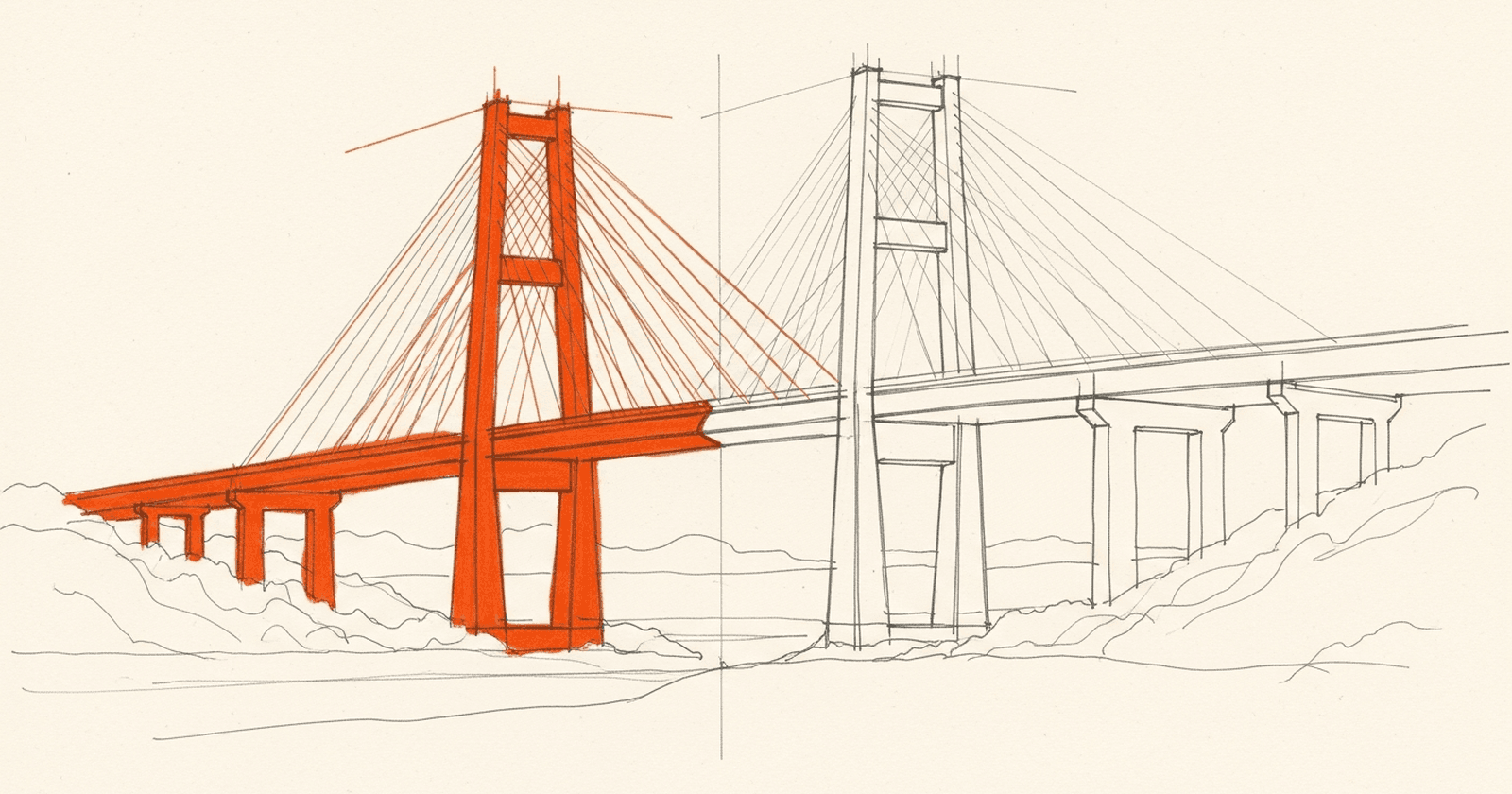
They Loved the Demo. They Believed the Case Study. They Still Did Not Buy.
Outcome Confidence
Demo enthusiasm and post-demo silence are not contradictions. They are the predictable shape of a buyer who has cleared one confidence gate and not the other. The diagnostic, the second question, and the CRM column that replaces deal stage as the predictor of close.

By Wilton Blake, B2B Decision Strategist
17 years in B2B. Now diagnosing why qualified pipeline loses to no decision.
Key Takeaways
Demo enthusiasm clears one buyer confidence gate (the vendor) but leaves a second gate untested (the buyer's confidence in their own ability to land the outcome).
B2B vendor consideration and vendor switching operate as distinct decision stages with different antecedents (Heide & Weiss, 1995). Two gates, not one.
The second question to ask at the end of every demo: "Walk me through what the first thirty days look like on your side after we sign. Who is doing what. What are you worried will go wrong."
Score the answer 0-5 by specificity of named owners and named worries. Five predicts close. Zero predicts dead-at-70-percent.
Replace your "deal stage" column with an "Outcome Confidence" column on the pipeline view. The team argues about a different signal on Monday.
It is Tuesday morning, two weeks before quarter close, and Maya is looking at a Slack draft she has not yet sent.
The draft is to her account executive, Tom, and it reads: "what's going on with Whitewater." Whitewater is an eleven-month-old deal, a 600-person manufacturing services firm with a VP of Operations who said "this is really helpful" at the end of a demo three weeks ago. He accepted the tailored case study. He took the peer reference call. He has not responded to four nudges since.
Maya has a forecast call in two hours. She is going to have to tell her CEO whether Whitewater is in the quarter or not.
She does not know yet, but she is about to misdiagnose what is happening.
She closes the Slack draft without sending it.
The pattern she is about to misdiagnose
Every instinct she has tells her this is a follow-up cadence problem.
Send a value-add email. Schedule a second technical deep-dive. Loop in a peer reference. Suggest a co-creation workshop. None of these moves is wrong, exactly. They are the moves the playbook prescribes, and the playbook prescribes them because they are reasonable.
But none of these moves is what is actually happening on the prospect's side.
The hard truth Maya cannot yet name is that her own pipeline numbers have been telling her for years that her playbook is treating the wrong signal as forward motion. If she pulled her CRM for the last eight quarters and ran the math, she would find that deals where the prospect "loved the demo" close at roughly the same rate as deals where the prospect's demo response was mixed. The metric her team has been celebrating is not the metric that predicts close.
She has never run that query, because the playbook treats demo enthusiasm as forward motion, and to question the playbook is to question the system she has spent four years building. So she sends another nudge instead. She has built the four-dimension buyer readiness diagnostic into nothing in her process.
That gap is what is killing Whitewater.
Buyer confidence in your product is one variable. Buyer confidence in their own ability to land the outcome is a second one.
There is a question Maya's team is not asking.
A B2B buyer has to clear two separate confidence gates before they sign. The first gate is confidence in the vendor. The product can do this. The case study is plausible. The reference customer is real. The demo was responsive to questions. Gate One: cleared.
The second gate is confidence in themselves. We can land the outcome after we sign. Our team can deploy this. Our procurement will not stall it. Our IT will not block it. Our champion will not get pulled onto another priority before we go live. The risk we are taking is a risk we can absorb.
That second gate is Outcome Confidence, and Maya's playbook does not measure it.
Empirical research in industrial marketing has been pointing at this distinction for thirty years. B2B vendor consideration and vendor switching operate as distinct decision stages with different antecedents, which means challenger vendors must clear two separate gates rather than one continuous decision (Heide & Weiss, Journal of Marketing, 1995). The gates are not sequential moments in a sales funnel. They are independent variables. A buyer can max one and leave the other unmet, and the deal will die at 70 percent every time.
Field research on supplier trust in B2B purchasing finds the same architecture from a different angle: buyer trust in the supplier significantly reduces decision-making uncertainty, which means trust is not a relationship outcome, it is a cognitive input to the second gate (Gao, Sirgy & Bird, Journal of Business Research, 2005). The buyer who loved the demo is telling you Gate One is cleared. The buyer who goes silent is telling you Gate Two is not. The same buyer. The same week. The same conversation. Two gates.
The industry has built its measurement system around the first variable and treated the second one as out of scope. That is why Whitewater is silent. It is not a follow-up problem. It is a diagnosis problem. The diagnosis exists at the level of the Outcome Confidence dimension, and Maya has never had a column for it.
Why proof points alone do not close the gap
This is the part that confuses revenue leaders the most.
The case study was tailored. The peer reference call happened. The implementation timeline was walked through twice. The integration architecture diagram was sent over. Every reasonable proof point was deployed.
The deal is still silent.
The operational reason is that proof of the vendor is not proof of the buyer's own implementation. The buyer can fully believe your product works, fully believe your reference customer's outcome was real, and still privately believe that their team is not the team that can land the same outcome. The case study lands on Gate One. It does not touch Gate Two.
Experimental research on what actually moves B2B purchasing intent points in the same direction. Digital-influencer competence enhances purchasing managers' intention to buy advocated solutions; competence minimizes capability and relational concerns more effectively than warmth, particularly when manager-influencer identification is low (Crisafulli et al., Industrial Marketing Management, 2022). Translate that out of the academic register: what closes a buyer's Gate Two concerns is competence signal, specific to their situation, that closes their fear about their own implementation. Warmth, relationship-building, and "we are here for you" language does not close it. Specific competence signal does.
Field studies of organizational buyers find B2B brands serve as risk-reduction heuristics, with brand sensitivity highest in both low-risk and high-risk situations, producing a U-shaped relationship between purchase risk and brand sensitivity (Brown et al., 2011). The Whitewater deal sits in the high-risk leg of that U, where brand alone cannot close the gap. Specific evidence of post-sign capability is what closes it, and Maya's team has been operating as if more brand-quality proof points would do the job. They will not.
The second question
Here is the diagnostic. The question Maya's team is not asking.
At the end of every demo, after the buyer has said "this is really helpful," the rep asks one second question. The question is not a closing question. It is a diagnostic question. It is this:
"Walk me through what the first thirty days look like on your side after we sign. Who is doing what. What are you worried will go wrong."
The answer to that question, more than any other signal in the sales process, predicts whether the deal will close.
Three answer shapes show up. Score them zero to five.
Shape A. Specific, named owners, named worries. "Alex from operations would own the rollout. We'd run pilot on the Northeast region for thirty days because our compliance review is tighter there. I'm worried about the data migration window because we tried something similar with another vendor two years ago and it took six weeks longer than planned. I want a contingency for that." Score: four or five. The buyer has done the cognitive work. They have self-generated evidence of their own capability to land the outcome. This deal closes.
Shape B. Vague, "we'll figure it out," "I'd loop in IT," "I think Alex would own it but we'd have to talk." Score: two or three. The buyer is not running from the conversation, but the cognitive work has not happened yet. The deal will stall. This is your priority intervention deal.
Shape C. The buyer cannot answer at all. They redirect to product questions. They say "we'd cross that bridge when we got to it." They ask if you have an implementation team. Score: zero or one. The deal is dead at 70 percent and you do not know it yet. Whitewater is a Shape C deal.
Why does this question work when the demo, the case study, and the peer reference did not?
Because the buyer is generating the evidence themselves. Buyers believe what they generate themselves far more than what you claim; direct experience of a solution produces confidence that predicts purchase, while advertising produces weaker beliefs held with less conviction (Smith & Swinyard, Journal of Marketing Research, 1983). The second question forces the buyer to construct a specific mental model of their post-sign reality, which means the answer they give you is also the evidence they are giving themselves. If they can construct it, they believe it. If they cannot construct it, they do not believe it, no matter how many proof points you stack.
The case study tells the buyer the vendor can do it. The second question tells the buyer they can do it. Only the second one closes Gate Two.
A new CRM column
Maya goes back to her pipeline view after the forecast call.
She does not add a new note to the Whitewater deal. She adds a new column to the entire pipeline view.
The column is called Outcome Confidence and it is scored zero to five. Every rep, after every demo, scores the deal based on the answer to one second question. The scoring rubric is two sentences long. Five means specific named owners and specific named worries. Zero means the buyer cannot construct the first thirty days.
The Monday pipeline review the following week is structurally different. The column the team used to argue about was deal stage, and deal stage said Whitewater was at 70 percent. The column they argue about now is Outcome Confidence, and Outcome Confidence on Whitewater is zero. Tom did not ask the second question because the playbook did not have it. The deal is not at 70 percent. The deal is dead. The team agrees, exits Whitewater from forecast, and Maya reallocates Tom's pipeline attention to two Shape B deals he can still move.
The forecast call the following month is quieter. The deals on the call are the deals that have earned their place on the call. The deals that have not earned it have been named as such, instead of being dragged through three more weeks of nudges that were never going to work.
Six months later
Maya runs her Monday pipeline review with one new column and three retired ones.
The reps stopped marking deals "going well" based on demo enthusiasm. They started marking deals "going well" based on the buyer's ability to articulate, unprompted, what they were going to do in the first thirty days. The shape of the conversation in deal review changed. The shape of the forecast call changed. The shape of the quarter changed. Win rate moved seven points.
She thinks back to the Tuesday morning eleven months ago. The Slack draft. The forecast call she walked into not knowing what was happening with Whitewater. The eleven dead deals matching the same shape that followed it.
She did not need a better demo. She did not need a better follow-up cadence. She did not need a new SE leader or a reorganized territory or a tighter ICP filter. She needed a diagnostic that named what was actually killing her quarter, and a column on her pipeline view that scored it.
Buyer-product fit is one variable. Buyer-self-fit is the variable the industry has been pretending was out of scope for as long as anyone in your seat has been carrying a number.
How to take the diagnostic
If you want to see what your own pipeline looks like through this lens, take the four-minute Buyer Readiness Check. It runs the same diagnostic Maya now runs on every deal, scored across all four dimensions: Problem Conviction, Evaluation Clarity, Outcome Confidence, and Organizational Readiness. You get a tiered score per dimension plus the weakest-link read on which dimension is killing the deals you are losing to "no decision" right now.
The check takes four minutes. The diagnosis takes the rest of your quarter.
FAQ
Why do prospects who loved the demo not buy?
Because demo enthusiasm clears one confidence gate (the product can do this) but leaves a second gate untested (the buyer's confidence in their own ability to land the outcome after they sign). Roughly 56 percent of B2B inaction losses come from buyer indecision rather than competitive loss (Dixon & McKenna, Harvard Business Review, June 2022), and most of that indecision sits in the second gate. The buyer believes you. They do not believe themselves. No follow-up cadence closes that gap; only a diagnostic that names it does.
What is buyer Outcome Confidence and how do I measure it in B2B sales?
Outcome Confidence is the buyer's confidence in their own ability to land the specific outcome your solution promises, after they sign. You measure it by asking one second question at the end of every demo: walk me through what the first thirty days look like on your side, who is doing what, what you are worried will go wrong. Score the answer zero to five based on the specificity of named owners and named worries. Five is specific. Zero is "we will figure it out." Run the score on every active deal, every Monday.
What question should I ask after a B2B demo to predict whether the deal will close?
Ask the buyer to walk you through what the first thirty days look like on their side after signing, who is doing what, what they are worried will go wrong. Specific, named answers predict close. Vague answers predict stall. No answer predicts the deal is already dead, even if your CRM still says 70 percent. The question works because it forces the buyer to self-generate evidence of post-sign capability, which is the only signal that closes the second confidence gate.
Blog